 0
 0
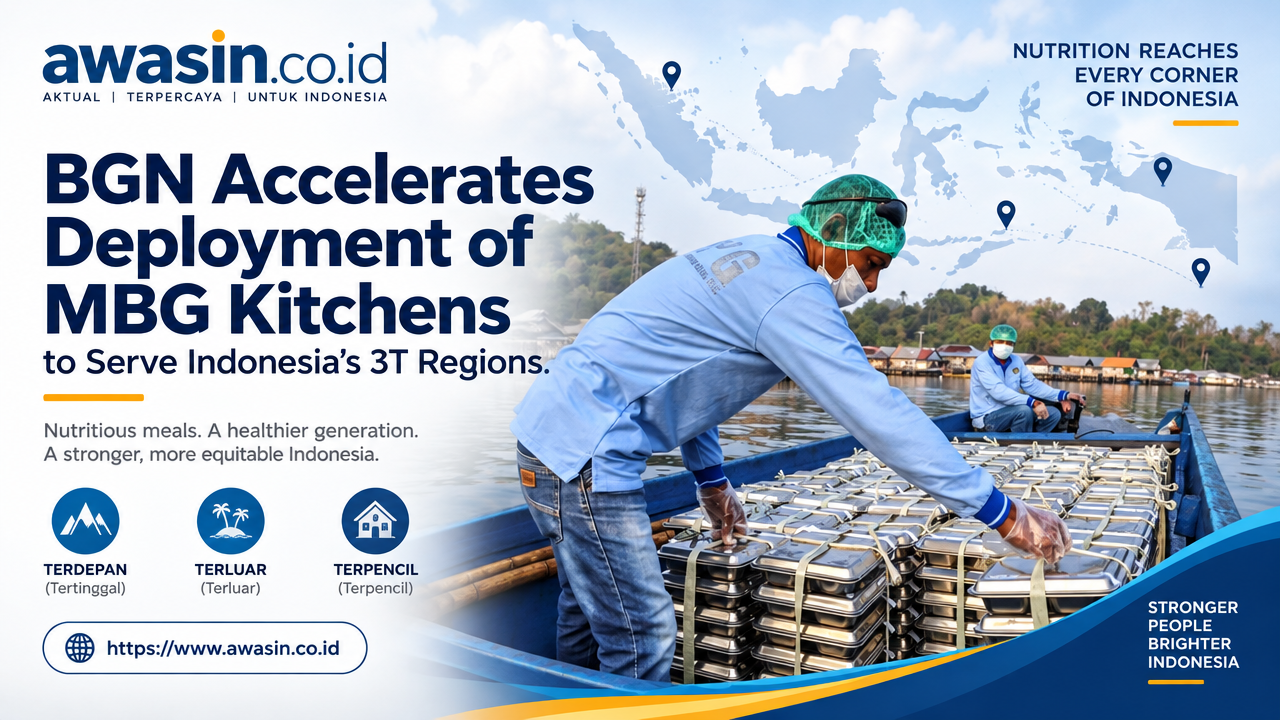
The Badan Gizi Nasional (BGN), Indonesia’s National Nutrition Agency, is intensifying efforts to activate Makan Bergizi Gratis (MBG) kitchens, officially known as Satuan Pelayanan Pemenuhan Gizi (SPPG), across the country’s 3T regions—tertinggal (underdeveloped), terdepan (frontier), and terluar (outermost). This initiative aims to improve access to nutritious meals and reduce malnutrition challenges in communities located in these remote and marginalized areas.
Background of MBG Program Expansion
On November 24, 2026, BGN officially announced that the activation phase of MBG kitchens in the 3T areas is currently in progress. This step follows the agency’s earlier large-scale launch in mid-October, where 980 SPPG kitchens were inaugurated across 16 provinces, mainly targeting regions with high stunting prevalence and other nutritional vulnerabilities.
The MBG kitchens provide free nutritious meals designed to improve community health, particularly among children and vulnerable populations, by ensuring adequate intake of essential nutrients. This approach is critical given Indonesia’s ongoing public health challenge with stunting and malnutrition, especially prominent within isolated and under-resourced districts.
Gradual Activation to Safeguard Quality and Safety
BGN emphasizes a cautious, phased approach to bringing these kitchens into full operation. The agency implements a mandatory verification process for every kitchen, assessing compliance with health and safety standards to prevent adverse outcomes, such as foodborne illnesses. This meticulous screening guarantees that each facility is fully prepared to serve safe and nutritious meals to the local population.
This strategy stems from previous issues encountered with rapid rollouts, where careful monitoring was needed to mitigate risks. By deploying the MBG kitchens progressively, BGN ensures that quality control is maintained, operational challenges are identified early, and the kitchens sustainably serve community nutritional needs.
Community and Stakeholder Engagement
The activation of MBG kitchens involves close collaboration with local governments, health authorities, community organizations, and other stakeholders. BGN conducts outreach and training programs to equip local partners with the necessary resources and knowledge to manage and maintain the kitchens effectively.
This participatory approach helps address logistical and operational hurdles posed by the remote geographies of the 3T regions. It also fosters local ownership, critical for the long-term sustainability and success of providing free, nutritious meal services.
Significance for Indonesia’s Public Health Goals
Indonesia has been committed to reducing malnutrition and stunting rates for years, with national strategies focusing on improving food security and dietary quality. The activation of MBG kitchens in challenging 3T zones is a pivotal component to these efforts, aiming to bridge significant gaps in nutritional support.
According to data reported by BGN, stunting rates in some 3T provinces remain disproportionately high, underscoring the urgent need for accessible nutrition interventions in these areas. By facilitating equitable food provision, the MBG program contributes to the broader goal of enhancing child growth and overall community health.
Chronology of Key Developments
- September 18, 2026: BGN announced plans for a phased rollout of MBG kitchens to mitigate food poisoning risks, highlighting the strict verification process before kitchens begin operation.
- October 14, 2026: The official launch of 980 MBG kitchens in 16 provinces, with a focus on high-stunting and 3T regions, marking a significant expansion phase.
- November 24, 2026: BGN confirmed the ongoing activation of MBG kitchens in 3T areas, ensuring each meets quality and safety benchmarks before full operation.
Next Steps and Outlook
Moving forward, BGN plans to continue expanding the MBG program, with a clear focus on monitoring and evaluation to optimize operations. The agency is also exploring potential innovations to improve logistics and nutrient delivery in remote locations.
Additionally, sustained engagement with local stakeholders will be key in scaling the program while enabling adaptation to the specific needs of distinct regions within Indonesia’s 3T zone.
Through this careful, community-driven strategy, BGN aims to make a significant impact on public health nutrition, ensuring that even Indonesia’s most remote populations benefit from nutritious, free meals that support healthy growth and development.
Sources: CNN Indonesia, October 2026, CNN Indonesia, September 2026