 0
 0
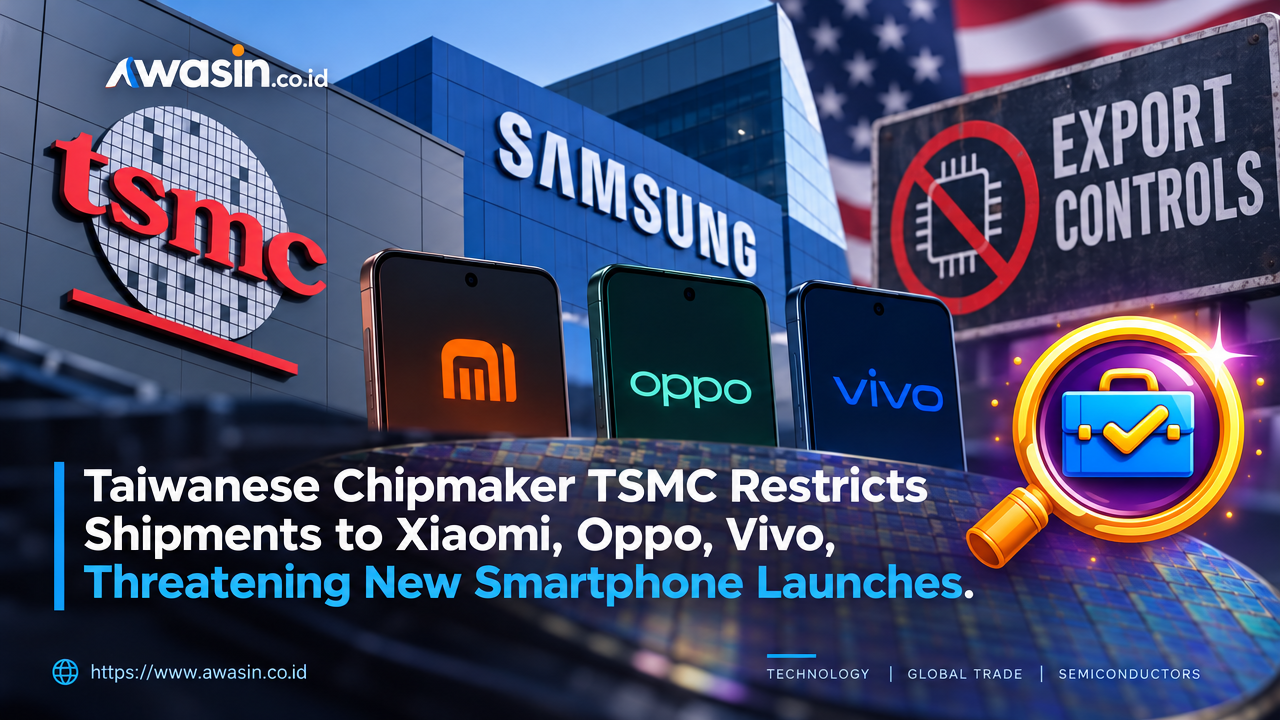
Major Taiwanese semiconductor manufacturer Taiwan Semiconductor Manufacturing Company (TSMC) has reportedly paused shipments of certain advanced chips to Chinese smartphone makers Xiaomi, Oppo, and Vivo amid new U.S. export control regulations. This supply disruption risks delaying the release schedules of new smartphones from these brands, which are significant players in the global mobile device market.
New U.S. Export Regulations Trigger Supply Freeze
On November 19, 2026, the United States Bureau of Industry and Security (BIS) implemented an interim final rule expanding export controls on semiconductor chips. Specifically, the regulation extended licensing requirements to chips manufactured using 16-nanometer (nm) and 14nm process nodes, designating these as advanced computing products subject to export restrictions when shipped to certain Chinese entities.
As a result, foundries like TSMC and Samsung Electronics have been compelled to halt shipments of these chips to Chinese customers until they secure export licenses from the U.S. Commerce Department.
Impact Focused on Custom Chips Using 14nm and 16nm Technologies
The halted shipments predominantly affect custom-designed processors that Chinese companies develop and manufacture using advanced process nodes at 16nm and 14nm. While mainstream smartphone processors from companies such as Qualcomm and MediaTek are not directly subject to these restrictions, the licensing hurdles create delays in delivering crucial components.
This dynamic is especially problematic for smartphone brands like Xiaomi, Oppo, and Vivo, which rely on these tailored chips for some of their mid- to high-end devices. According to technical industry observers, the uncertainty in supply timing threatens to postpone product launches, complicating the companies’ competitive strategies in a fiercely contested market.
Broader Market Reactions and Risks
Following the announcement, TSMC’s stock price experienced noticeable volatility, reflecting investor concerns about the financial repercussions of constrained shipments to a large portion of its customer base. Analysts caution that prolonging the supply pause or expanding restrictions could have wider ramifications, not just for the Chinese smartphone sector but for the global tech supply chain as a whole.
These developments come as the semiconductor industry grapples with supply-demand imbalances. Notably, other market segments such as NAND flash storage witnessed a price decline of roughly 20%, driven by oversupply and softening consumer demand, as reported by industry sources. However, such price trends do not offset the complications introduced by export controls on critical chip components.
Background on Taiwan’s Role in Semiconductor Manufacturing
TSMC is a cornerstone of the global semiconductor ecosystem, commanding approximately 54% of the foundry market share worldwide. Its extensive expertise in advanced manufacturing nodes attracts many clients seeking cutting-edge chips for smartphones, automotive electronics, AI applications, and more.
Because U.S. export regulations enforce compliance on extensions beyond U.S. borders, Taiwanese firms must navigate complex geopolitical pressures while managing relations with major customers like Chinese smartphone manufacturers. This situation underscores the strategic importance and fragility of today’s semiconductor supply chains.
Implications for Chinese Smartphone Brands
Smartphone makers Xiaomi, Oppo, and Vivo are especially exposed to this supply bottleneck as they compete aggressively in both domestic Chinese and international markets. Delays in component availability could disrupt their product launch calendars for late-2026 and early-2027 models, risking lost market share to rivals less affected by supply constraints.
Moreover, the restrictions may accelerate shifts toward alternative chip sources or prompt investment in domestic semiconductor capabilities within China, although such solutions require substantial time and capital.
Next Steps and Outlook
TSMC and Samsung are currently awaiting approval for export licenses while closely monitoring regulatory developments. Industry watchers expect continued short-term disruption and potential shifts in supply chain configurations depending on how the evolving export control framework is enforced.
Meanwhile, smartphone manufacturers may have to adjust product launches and supply chain strategies. Broader implications include possible changes in global competitive dynamics, with potential acceleration of regional semiconductor development programs to reduce reliance on foreign suppliers under geopolitical tensions.
In conclusion, the new U.S. export controls on 14nm and 16nm chips present a challenging hurdle for Chinese smartphone brands and their upstream partners. How these companies adapt will be critical for maintaining their market momentum amid increasing regulatory complexities.